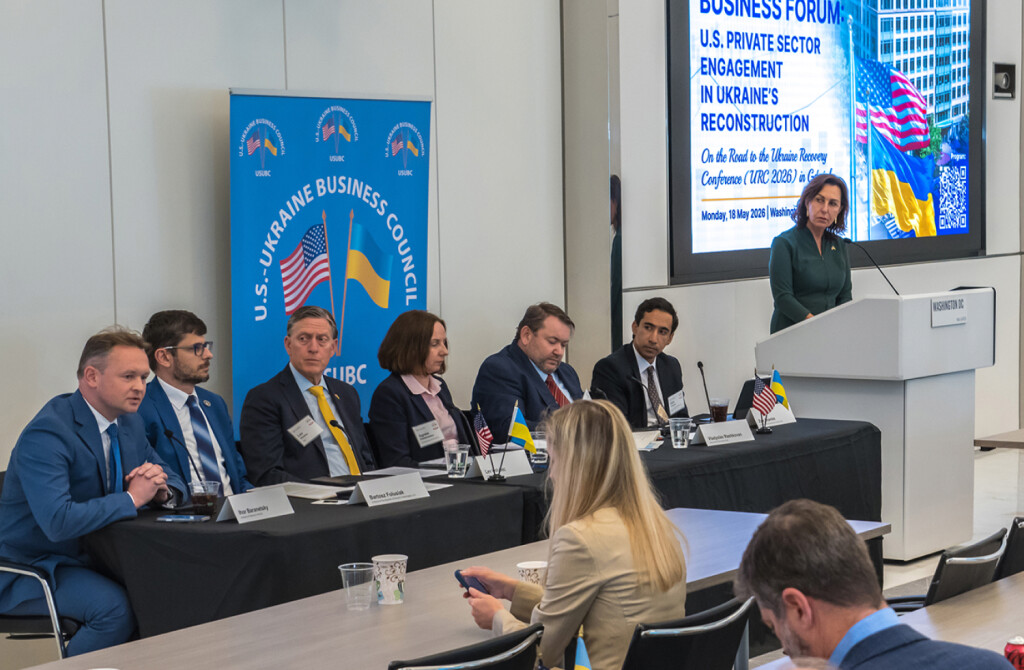
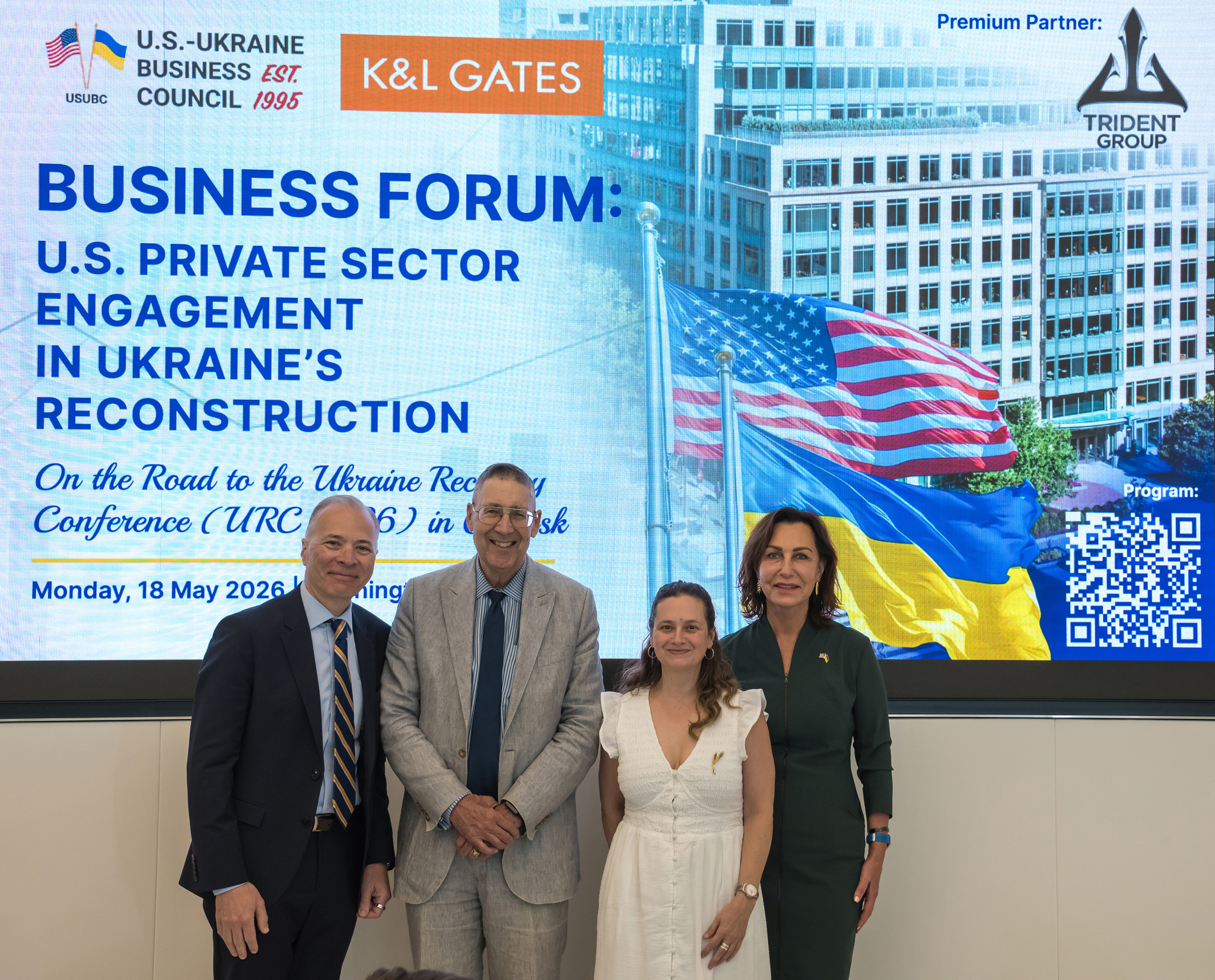
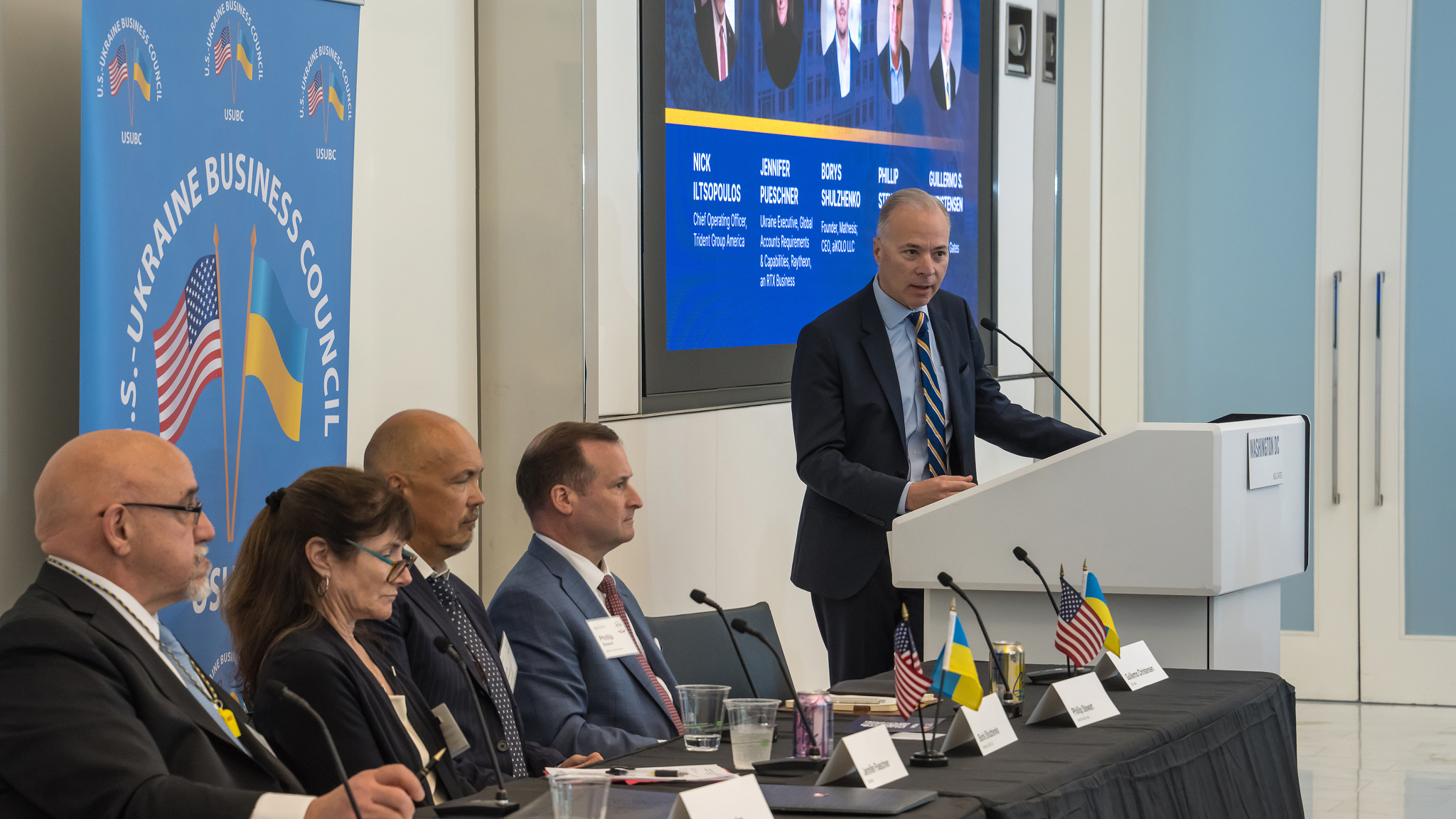
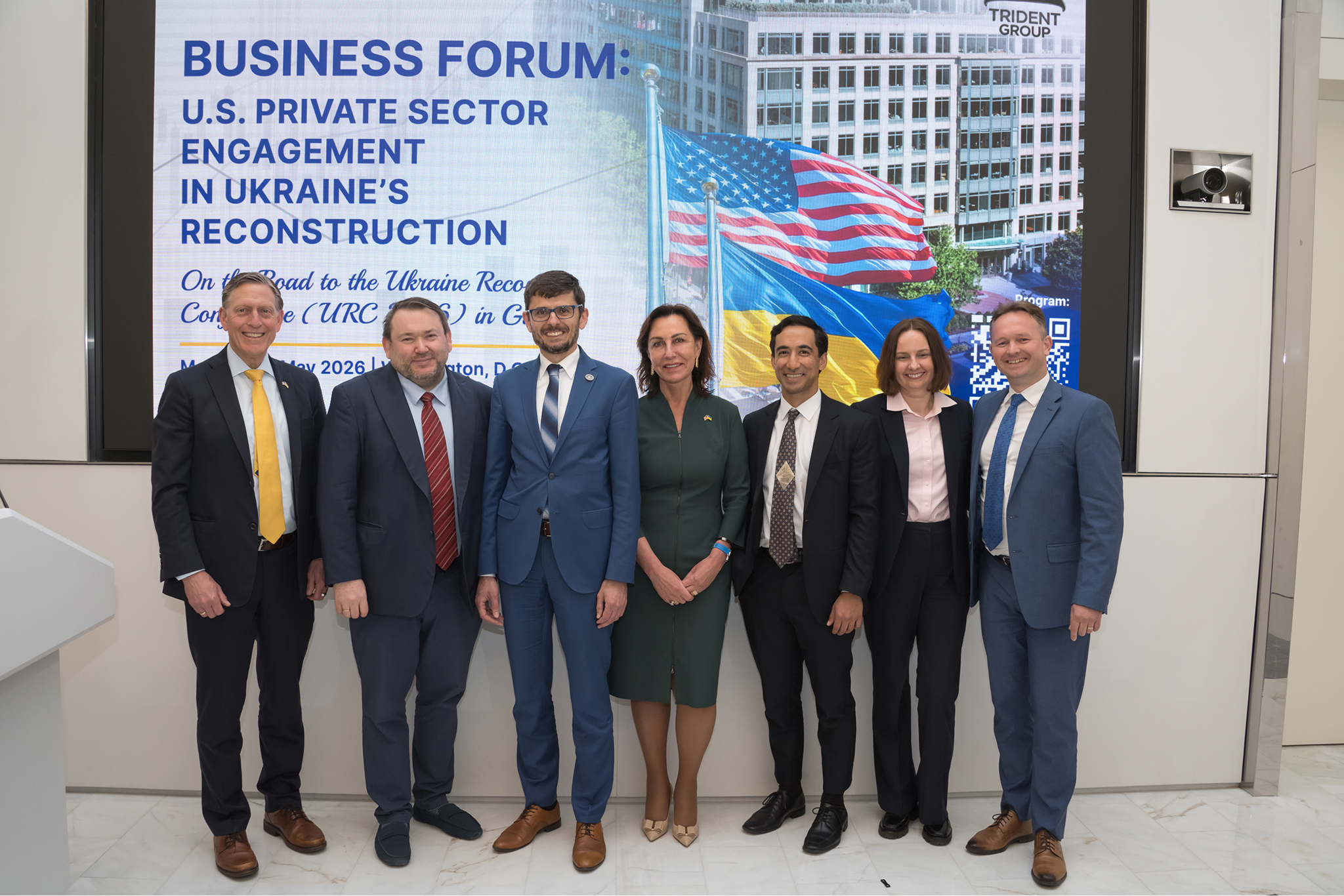
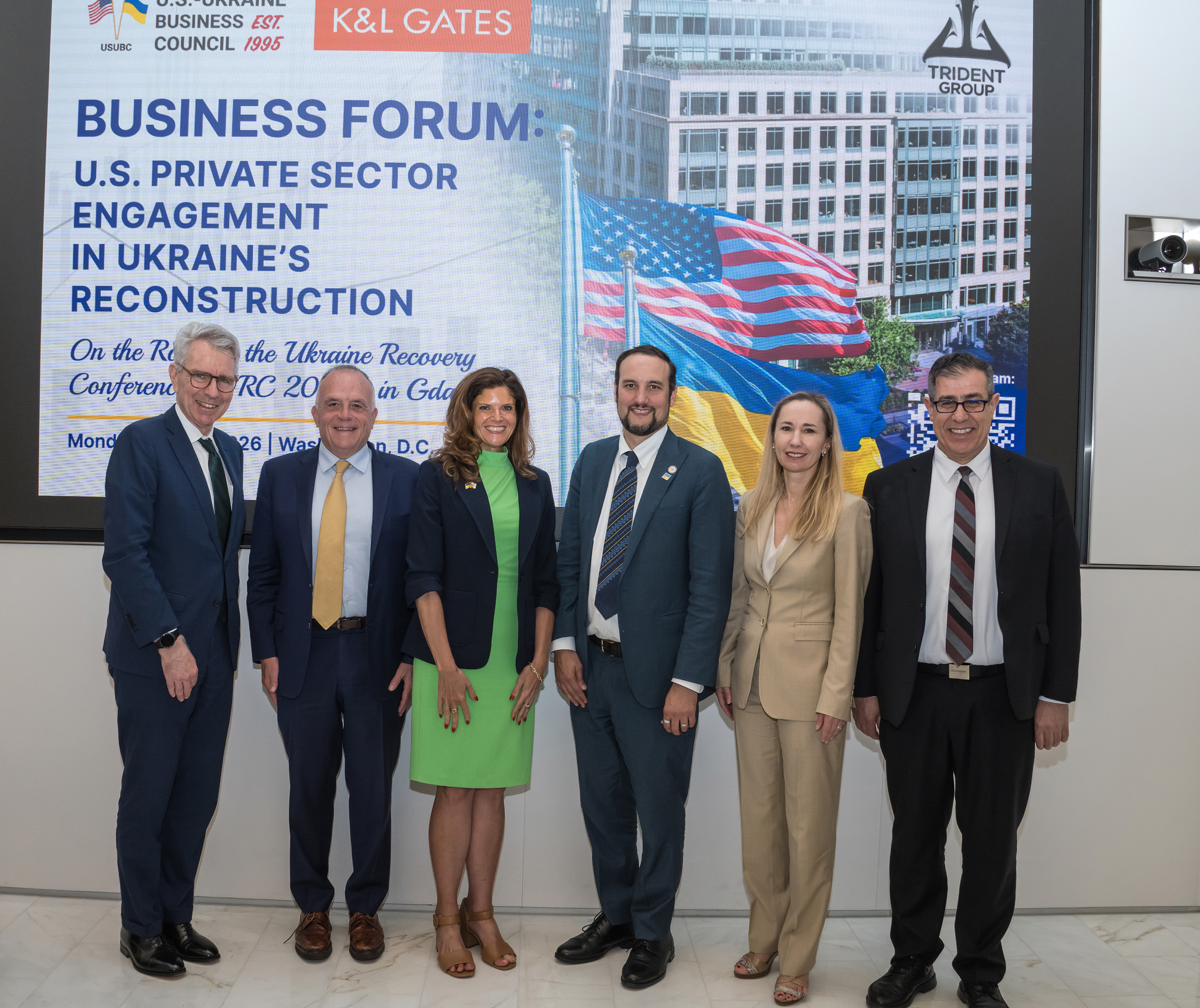
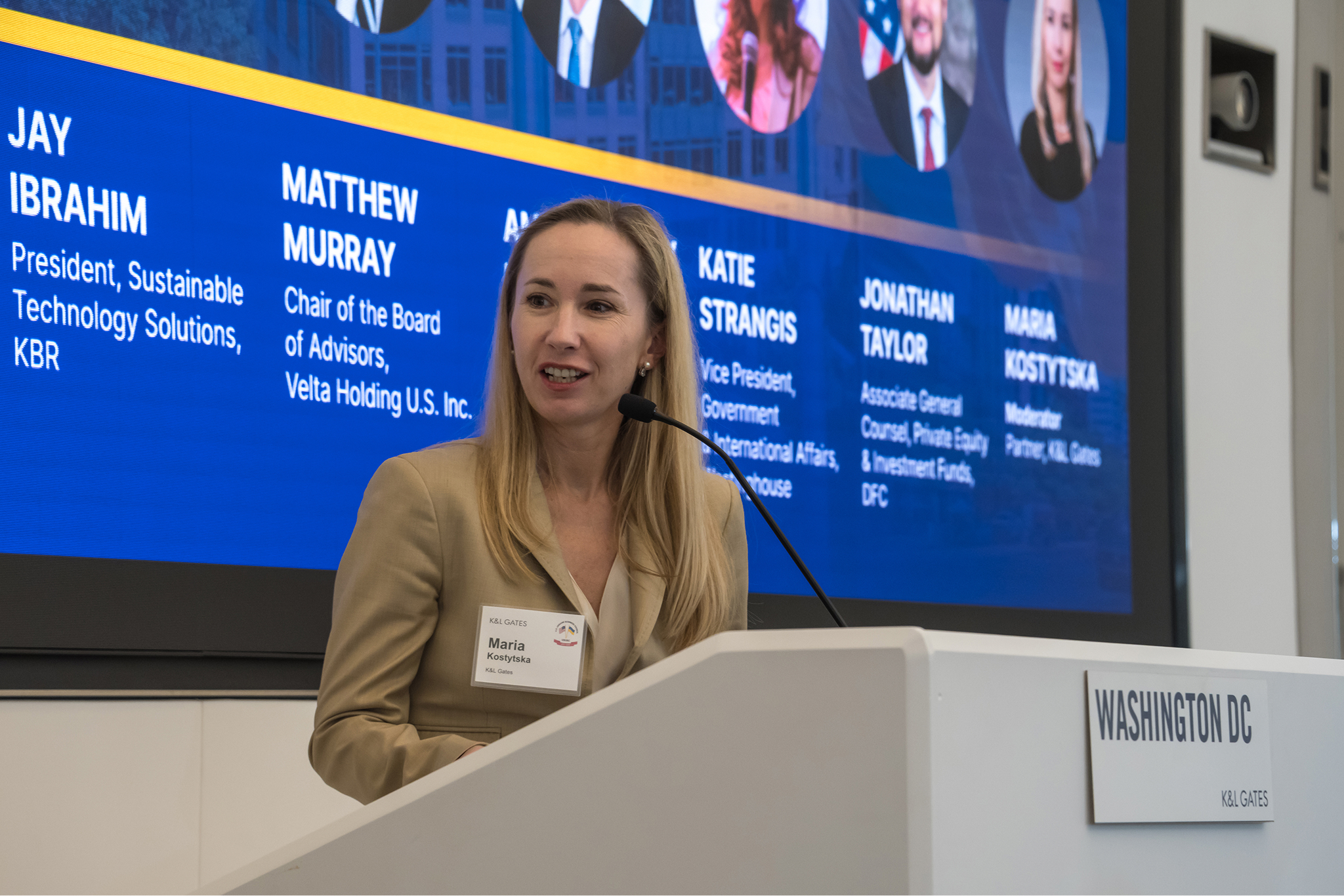
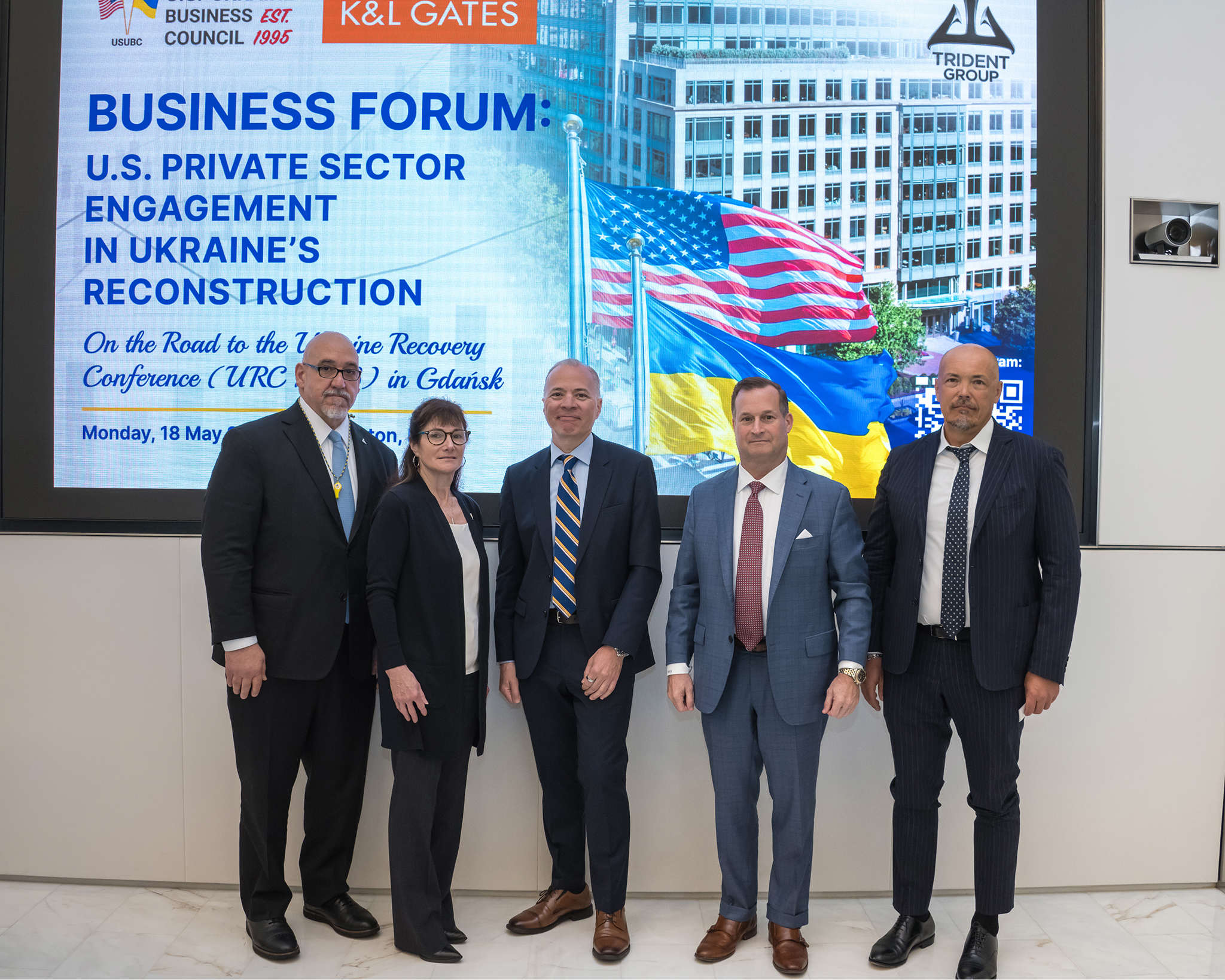
A Business Forum: U.S. Private Sector Engagement in Ukraine’s Reconstruction – “On the Road to the Ukraine Recovery Conference – URC-2026, in Gdańsk”, took place on 18 May 2026 at K&L Gates, 1601 K Street NW, Washington, DC, co-hosted by K&L Gates and the U.S.-Ukraine Business Council (USUBC), with support from Trident Group of America. The event focused on mobilizing U.S. private sector interest and participation in Ukraine’s reconstruction ahead of the 2026 Ukraine Recovery Conference.
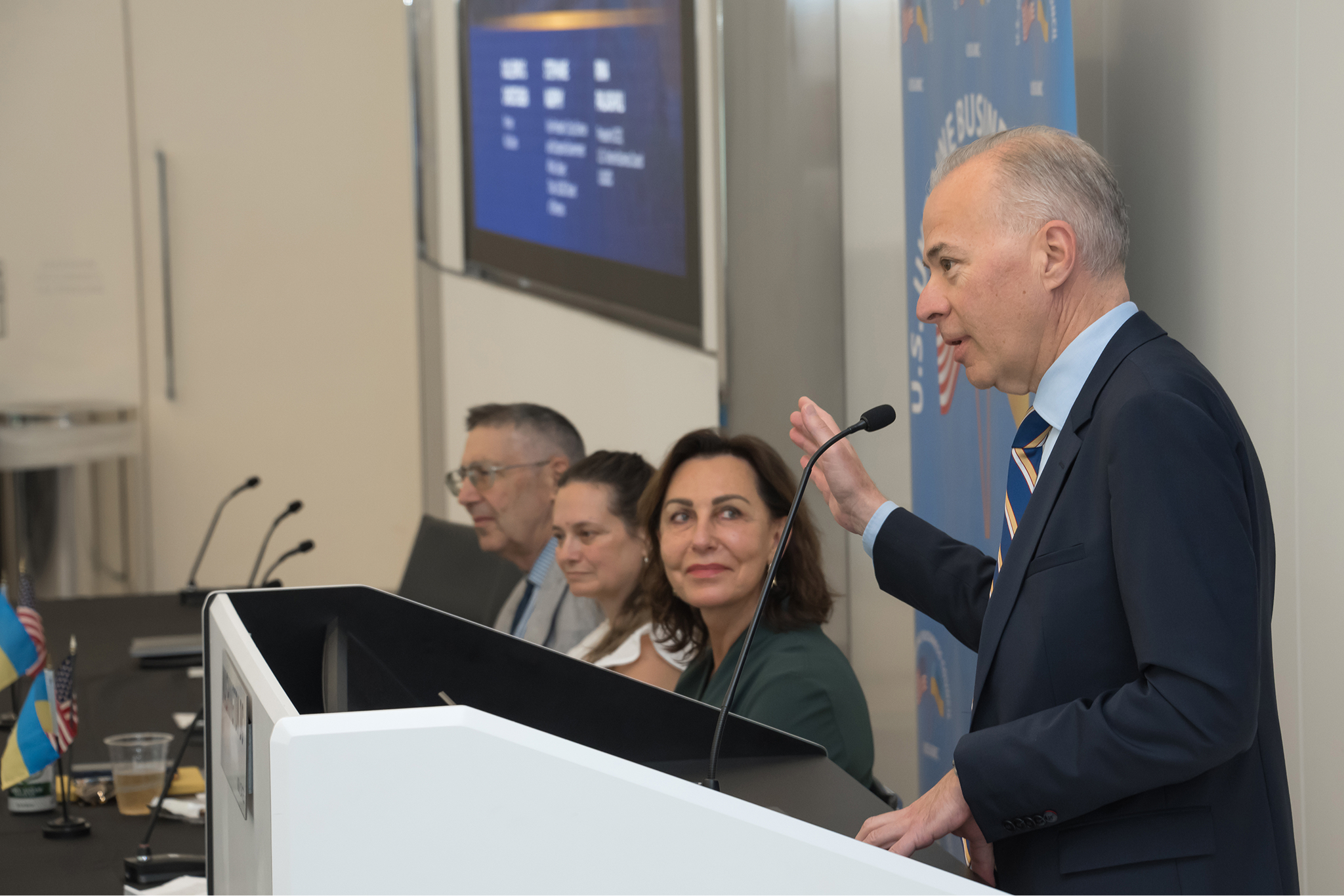
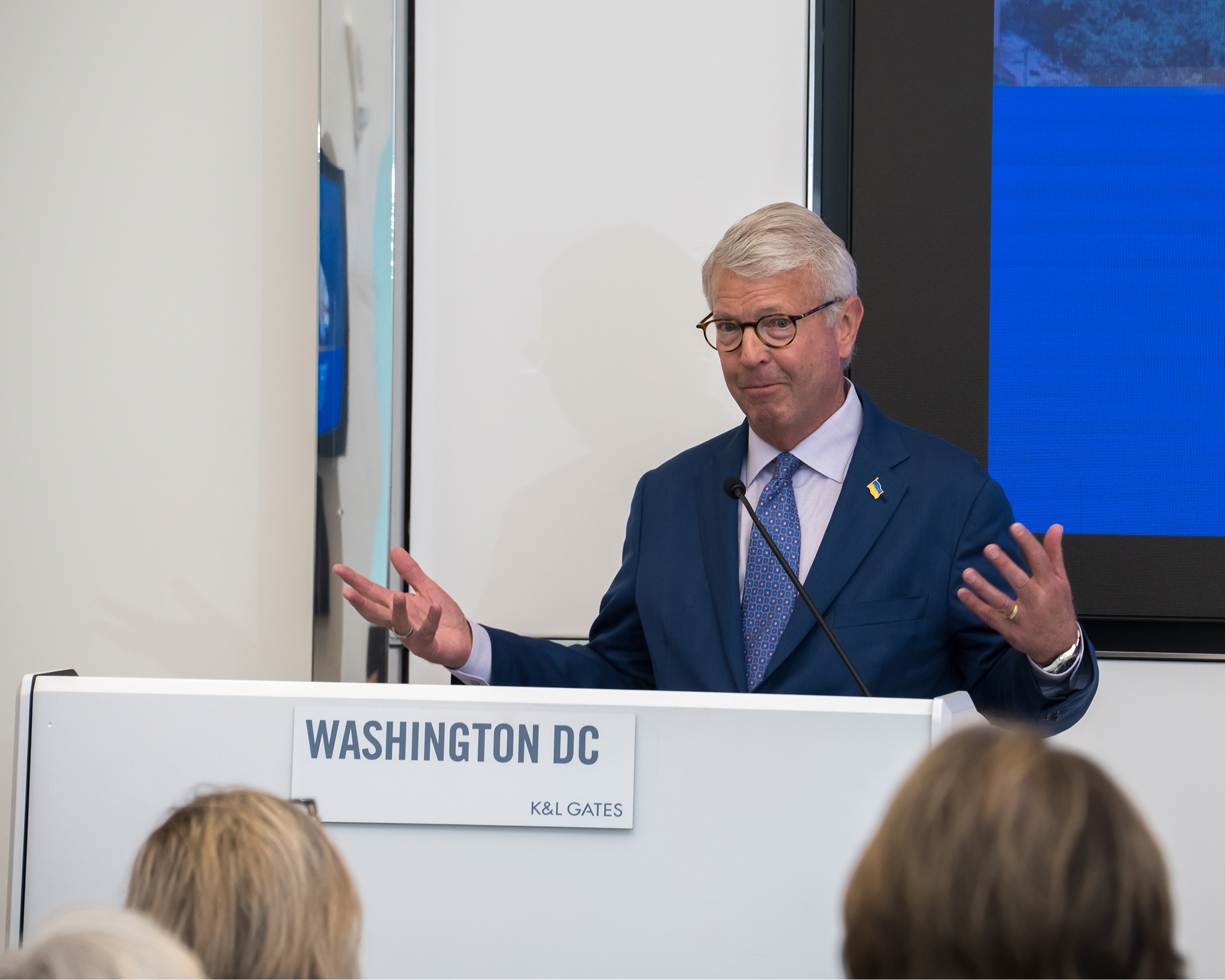
In the keynote address, Amb. John Herbst, Former U.S. Ambassador to Ukraine and Senior Director of the Eurasia Center at the Atlantic Council, emphasized that investors should act now rather than wait for the war to end, arguing that early engagement offers strong positioning for long-term growth. He highlighted opportunities beyond critical minerals, noting that even smaller investments today could yield significant returns as Ukraine rebuilds. In the Q&A, he noted that the Atlantic Council plans to release a paper outlining key requirements for investing in Ukraine and argued that Ukraine’s continued success in electronic warfare is placing strain on the Russian economy, citing remarks from Bank of Russia officials suggesting uncertainty within Russia’s economic leadership.
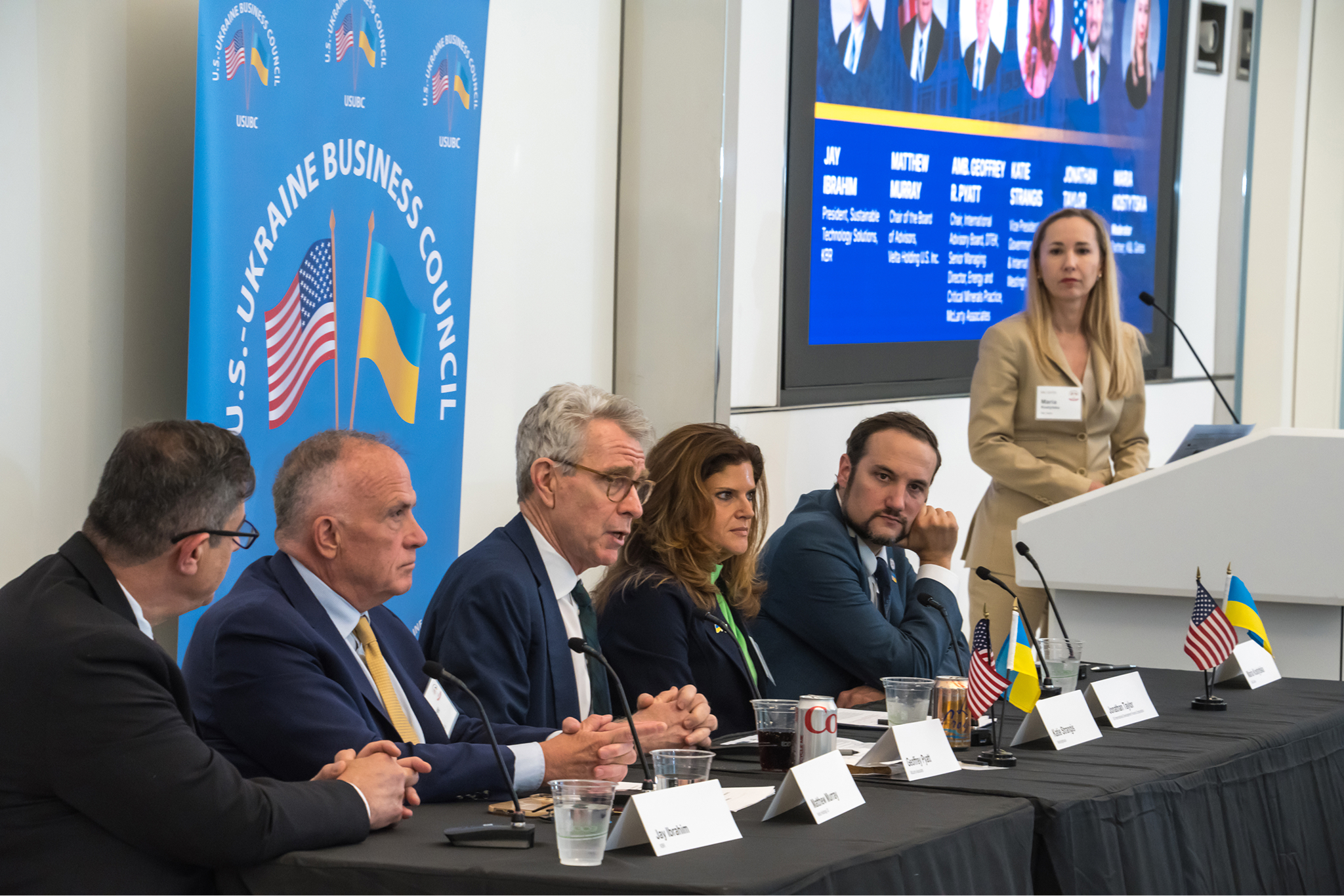
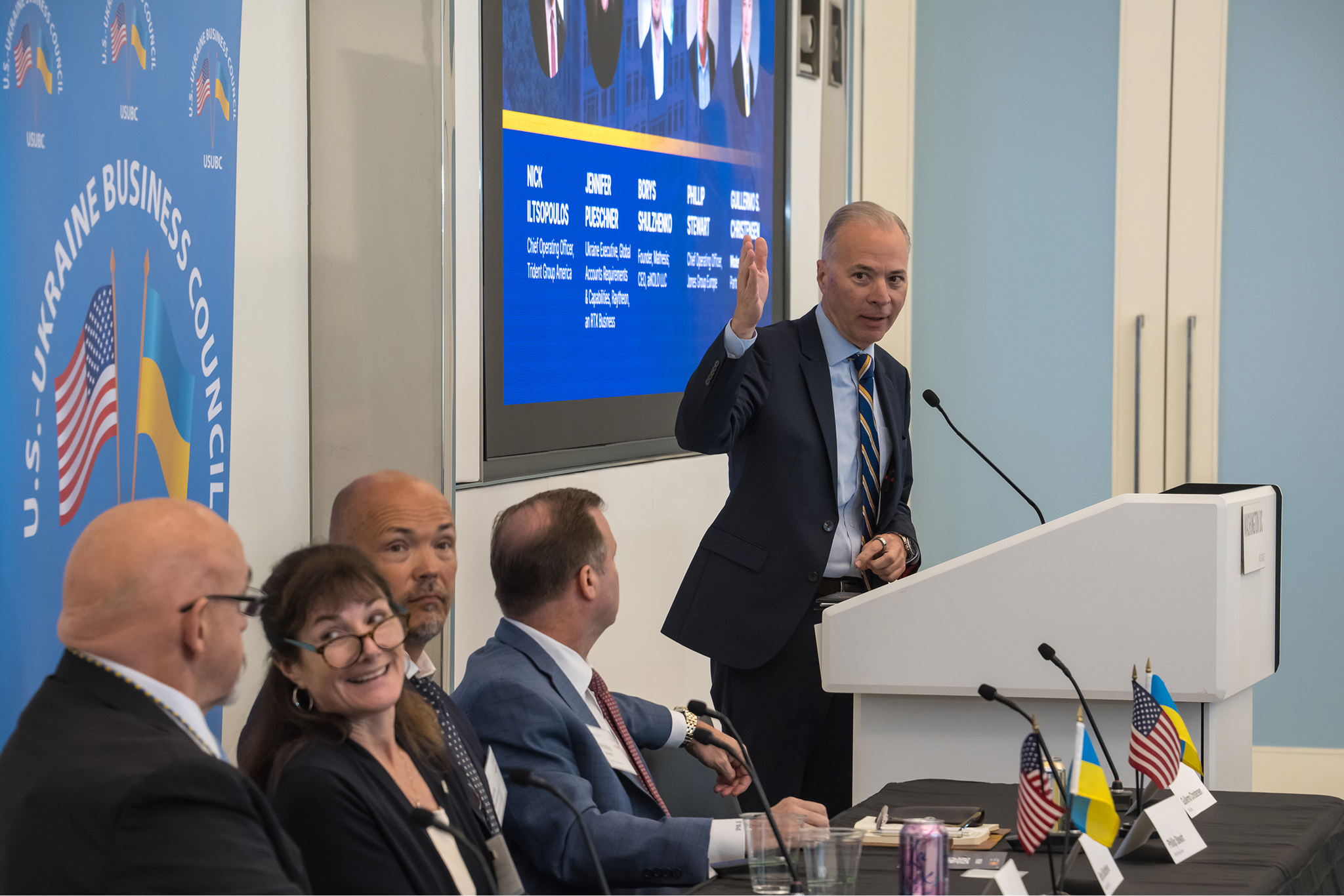
Panel One focused on Ukraine’s defense and security sector as a fast-moving innovation environment, with little separation between wartime needs and investment opportunities. Panelists highlighted how the conflict has exposed gaps in layered defense systems while accelerating the development of drones, robotics and AI-enabled technologies that have both military and civilian uses.
Several speakers pushed back on ideas that investments in Ukraine are high risk, stating that conditions in the country are often misunderstood and that companies willing to engage early can adapt and succeed, emphasizing the importance of speed, flexible procurement tools and maintaining Ukraine’s advantages in cost and agility. The speakers noted that slow U.S. industrial engagement would limit opportunities for future market access, as European partners are already moving aggressively. The Panel also discussed NATO’s role, focusing on the contributions of individual countries rather than formal alliance actions, and noted that policy is likely to follow business engagement.
Panelists identified challenges for Ukrainian Defense Tech startups, including limited access to capital and difficulty navigating U.S. regulatory system, while noting that Ukraine’s lower barriers allow for rapid experimentation. They also addressed concerns around intellectual property and the pace of technological change, emphasizing the need for collaborative and mutually beneficial partnerships.
At Panel Two, speakers discussed the strategic outlook for Ukraine’s energy and minerals sectors, emphasizing how the full-scale war has reshaped priorities around resilience, sustainability, affordability, and long-term investment. They addressed changes in the energy sector over four years of war and the importance of building a more secure, modern and decentralized system. Additional discussion focused on the strategic importance of critical minerals, the need to attract responsible investment while avoiding oligarchic influence, the renewed role of nuclear energy in Europe’s energy security, and the function of the U.S.-Ukraine Reconstruction Investment Fund (URIF), including its likely sector priorities such as energy, minerals, infrastructure, telecom and emerging technologies.
During the Q&A, participants debated whether investors should wait for a ceasefire or begin taking preparatory steps now, to position themselves for reconstruction opportunities. They also discussed the wartime expansion of state-owned enterprises in strategic sectors and whether that dominance should later be reduced, as well as how such a transition could be managed. A further major topic was risk mitigation, particularly whether war-risk and political-risk insurance can make investment viable during and after the war.
At Panel Three, speakers covered Ukraine’s reconstruction, which is increasingly framed not simply as post-war recovery, but as a large-scale economic modernization effort tied to EU accession and long-term structural reforms. While significant public financing is already in place—including IMF stabilization support, World Bank assessments, and more than $175 billion in broader aid—panelists emphasized that these mechanisms alone are insufficient. A clear, coordinated vision for reconstruction is still developing, with multiple institutions, strategies, and reports in play, but no single unified roadmap, requiring better coordination across donors and institutions to avoid duplication and fragmentation.
A central theme was that private sector capital must ultimately drive reconstruction, but investors will only engage where conditions support viable returns. That includes rule of law, clear land and tax frameworks, and protection of investor rights. There is strong interest and available capital to assist with project risk, but project readiness and bankability are also key issues. Bridging this gap will require converting high-level needs into structured, investable opportunities, supported by tools such as the U.S.-Ukraine Reconstruction Investment Fund (URIF), Development Finance Corporation (DFC) financing, and other public-private partnership models that help de-risk early-stage investments.
At an estimated $600 billion in need, Ukraine represents one of the largest reconstruction and modernization opportunities globally, spanning energy, infrastructure, logistics, critical minerals, and digital systems. Ultimately, success will depend on aligning reform progress, investment structures, and private sector incentives around a shared, Ukraine-led vision for rebuilding a more resilient and modern economy.
Significant attention was devoted to the upcoming Ukraine Recovery Conference – URC-2026, in Gdańsk and the opportunities the URC presents for the U.S. private sector.
Full Program



More Photos
Photos by David Hunsinger / davidhunsinger.com